
Data Governance Frameworks
Rapidly govern your data by relying on an established data governance framework

Introduction
This article sets out to describe the following Data Governance Frameworks:
(1) DAMA: DMBOK
(2) Microsoft Cloud Adoption Framework for a unified data platform
(3) The AI Strider Data Governance Framework
These frameworks overlap and bear several similarities but also differ.
This article is focussed on data governance in the context of Microsoft Fabric OneLake and associated data sources.
One of the most significant data governance reference frameworks is the DAMA - DMBOK framework.
DAMA is the Data Administration Management Association
and DMBOK is the Data Management Body Of Knowledge.
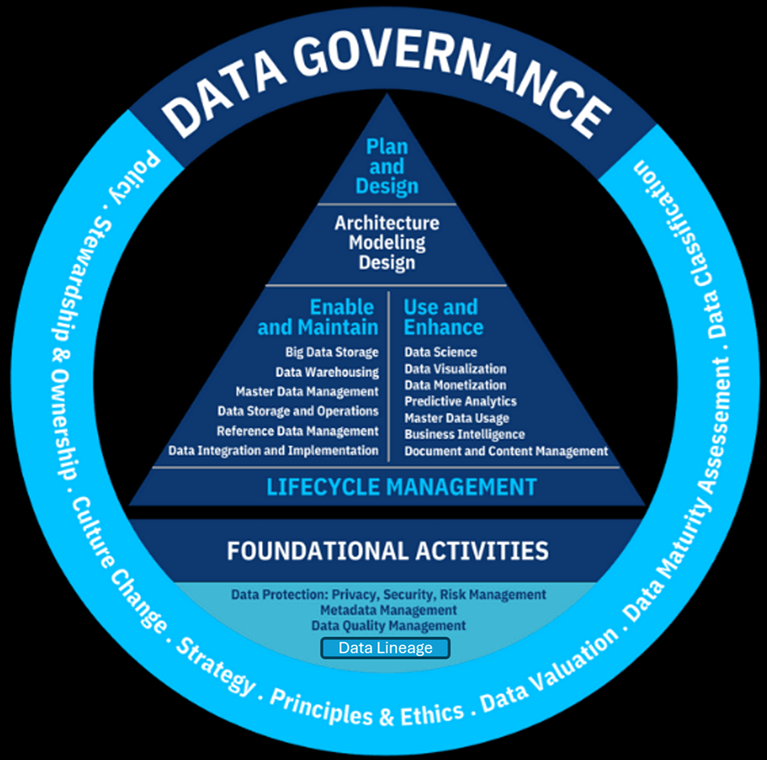
The DMBOK framework includes:
- Planning and Designing
- Architecture Modeling Design
- Enabling and Maintaining Data stores including Master Data Management
- Using and Enhancing data with Analytics and insights
- Data Lifecycle Management
- Foundational Activities such as Data Protection, Privacy, Security, Risk Management, Metadata Management and Data Quality Management & Data Lineage
(1) DAMA DMBOK
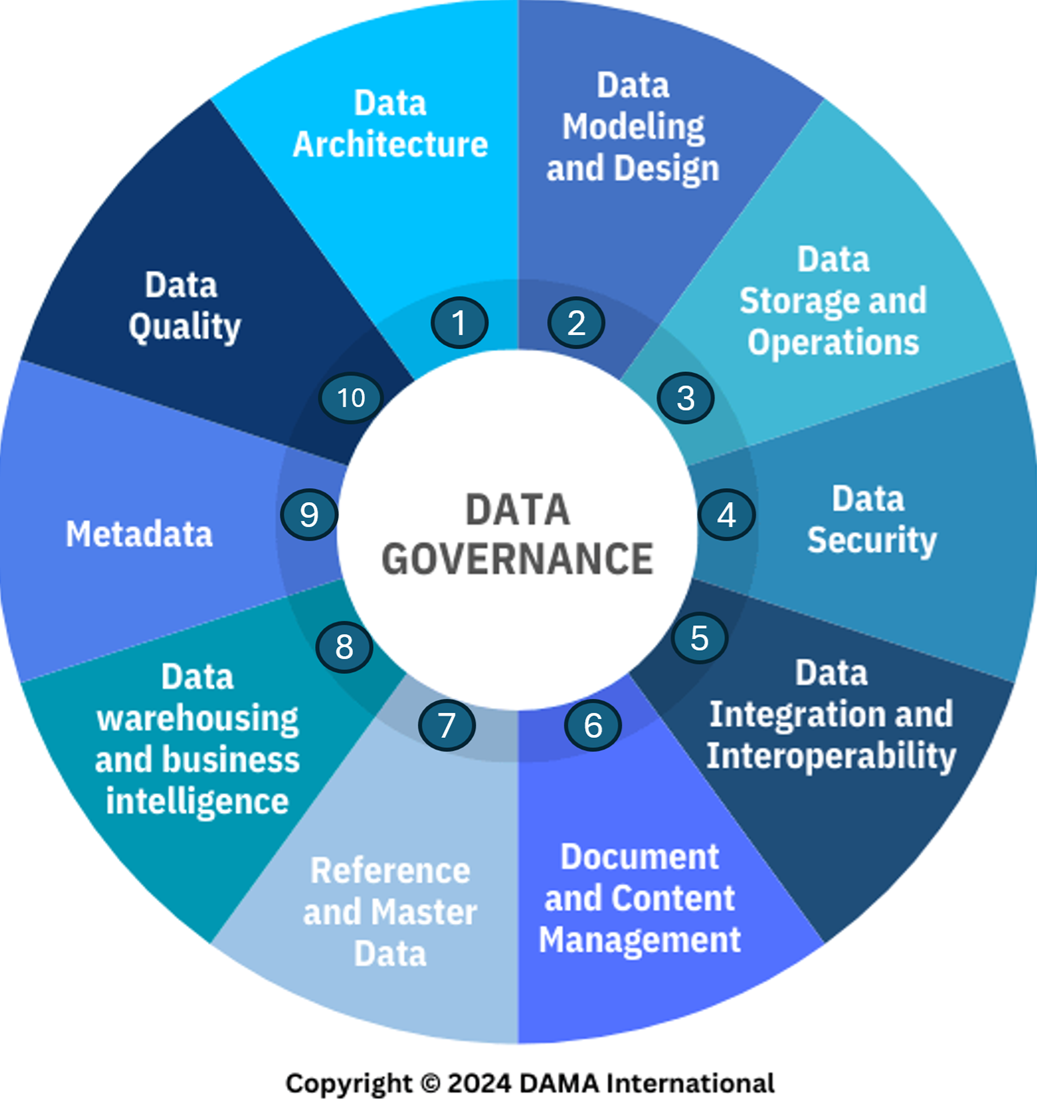
DMBOK also includes a useful Data Governance Wheel with ten spokes as follows:
- Data Architecture
- Data Modeling and Design
- Data Storage and Operations
- Data Security
- Data Integration and Interoperability
- Document Management
- Reference and Master Data
- Data Warehousing and business intelligence
- Metadata
- Data Quality
For further details around DAMA DMBOK see the following web site:
(2) Microsoft's Cloud Adoption Framework for Unified Data to enable analytics and AI Adoption
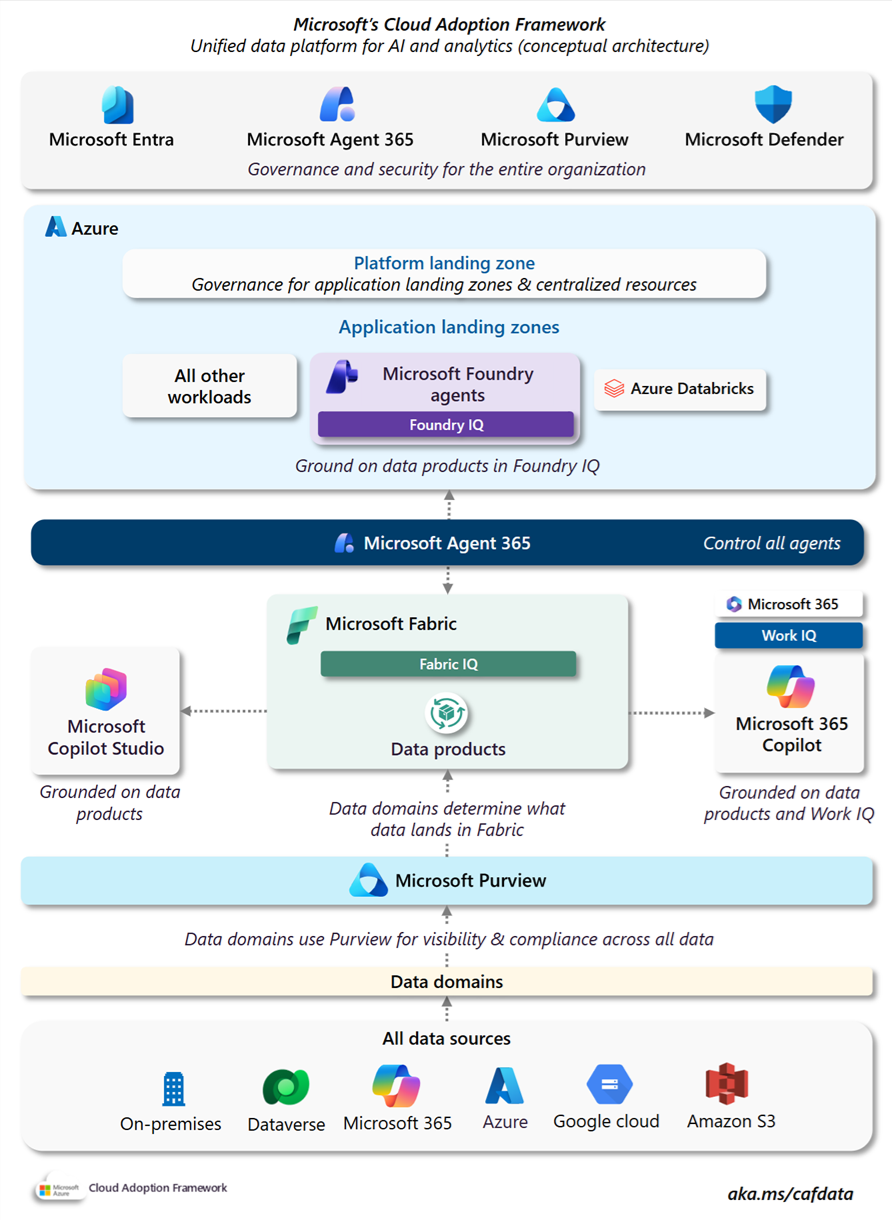
Microsoft provide a Cloud Adoption Framework to enable your data platform for AI and Analytics. It includes the following steps:
- Prepare your people
- Use Microsoft Fabric
- Integrate Azure
- Set Purview and Fabric baselines
- Set operational Standards
- Data processing standards
- Data Security standards
- Data Consumption
- Adopt AI
For more details see:
(3) The AI Strider Data Governance Framework
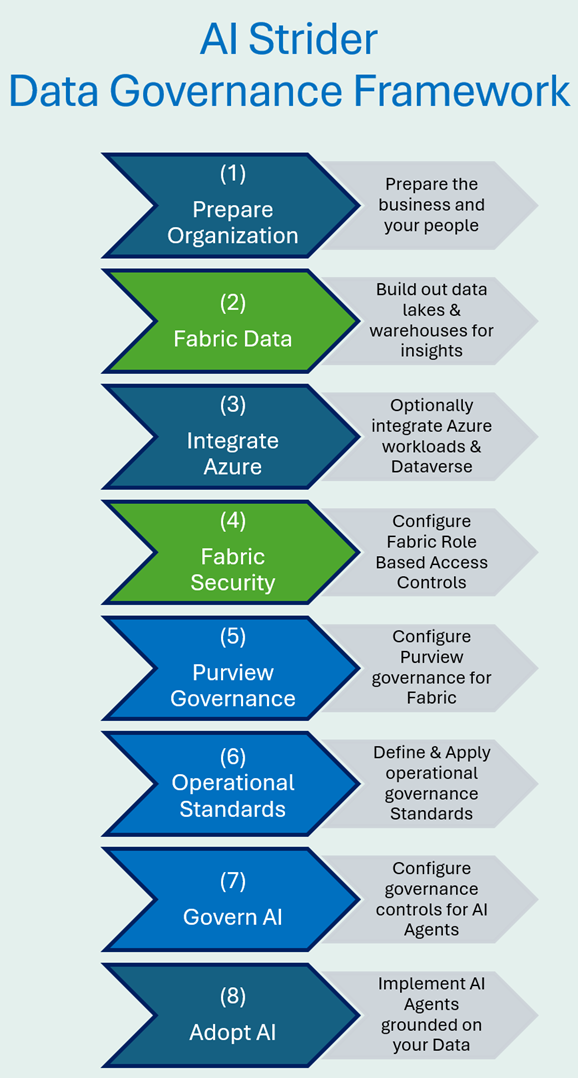
The AI Strider pragmatic implementation framework for preparing your data platform for AI Adoption is represented here.
This is adapted from the Microsoft Cloud Adoption Framework for Unified Data platforms with AI and Analytics.
The framework includes the following eight broad steps:
(1) Prepare the organization
(2) Build out Microsoft Fabric Data Elements
(3) Integrate with Azure workloads and Dataverse
(4) Implement Fabric Security
(5) Configure Purview governance for Fabric
(6) Define and apply operational governance standards
(7) Configure governance controls for AI
(8) Adopt AI
Please note that there is a much more detailed and comprehensive version of this framework that is made available to customers that engage our data governance services.
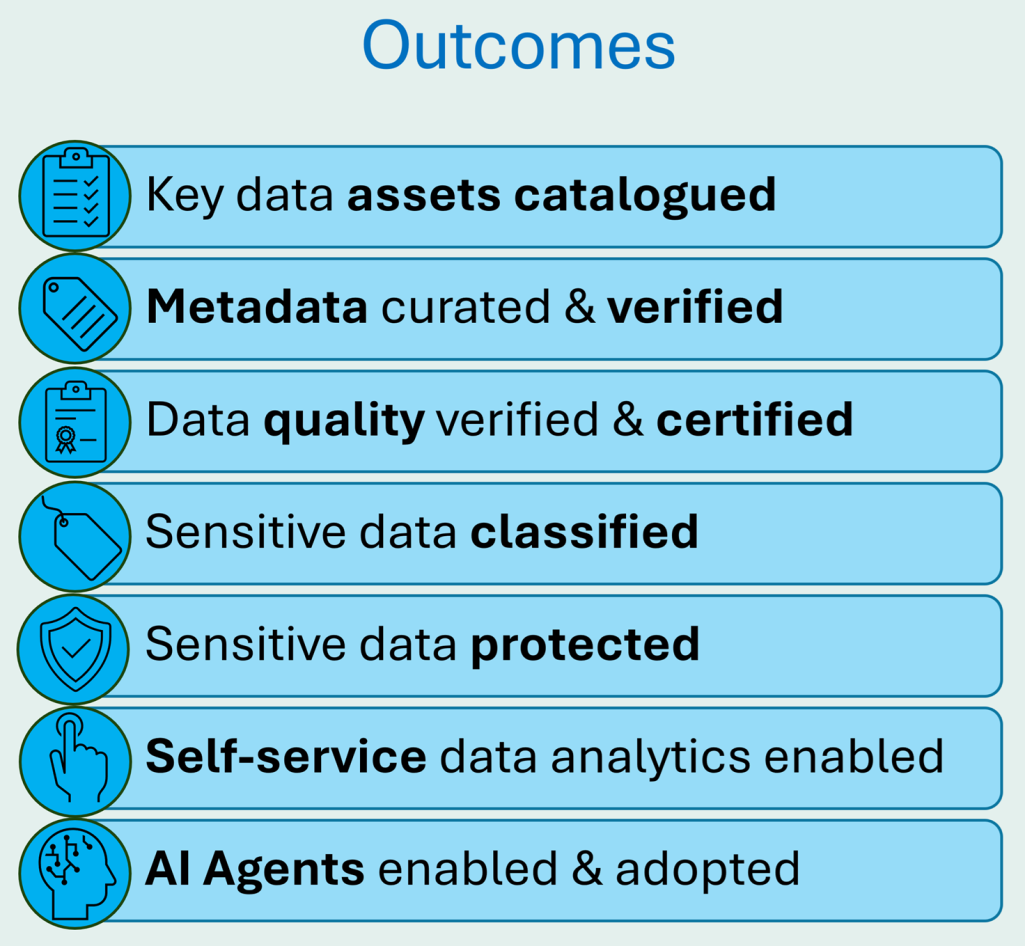
Typical outcomes to expect
The following outcomes are achieved by implementing the AI Strider Data Governance Framework:
Contact Us
If you are interested in our Data Governance services feel free to contact us to discuss your requirements.